

Nuclear Medicine
What is Nuclear Medicine?
Nuclear medicine is a form of diagnostic testing that provides both anatomical and physiological information about internal organs. In short this means we can evaluate both how the organs look and how the organ is functioning. Nuclear medicine allows us to visualize organ function at the cellular level. Because disease begins at the cellular level, nuclear medicine has the potential to identify pathology in an earlier, more treatable stage than other types of imaging that rely only on visual representation of the organs.
How does it work?
Nuclear medicine uses a small amount of radioactive isotopes called radiotracers or radionuclides to look at your internal organs and see how they are working. The radiotracer may be injected through an IV, ingested through the mouth, or inhaled through a breathable vapor. The radiotracer travels to specific target organs in the body-giving off gamma rays that can be detected by special cameras. A computer is then used to reconstruct pictures of the area of the body being imaged.

Common Nuclear Medicine procedures include:
Bone Scan
This scan is used to detect abnormal bone growth, usually due to tumors or infection.
A whole-body bone scan takes around 3-4 hours, which includes two separate visits. In the first visit you will be given an injection of a radioactive isotope into a vein in your arm. The isotope takes 2-3 hours to circulate through your body and get absorbed in the bone. You will be given a time to return to the Nuclear Medicine Department 2-3 hours after the injection. When you arrive for the second part, you will lie on an imaging table as you are scanned from head to toe.
Our Nuclear Medicine Providers
-
 Steven Harper MDSpecialties
- Imaging,
(573) 635-5264View Profile -
 Jeffrey Patrick MDSpecialties
- Imaging,
(573) 556-7755View Profile -
 E D. Roberts MDSpecialties
- Imaging,
(573) 556-7755View Profile -
 Bonnie Smith MDSpecialties
- Imaging,
(573) 556-7755View Profile -
 Marcus Wade MDSpecialties
- Imaging,
(573) 556-7755View Profile
Where We Provide Nuclear Medicine Services
-
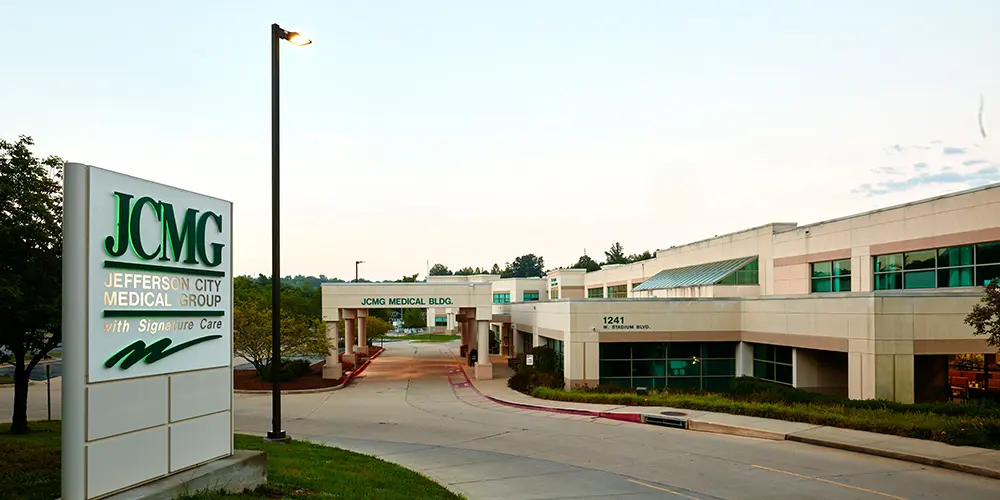
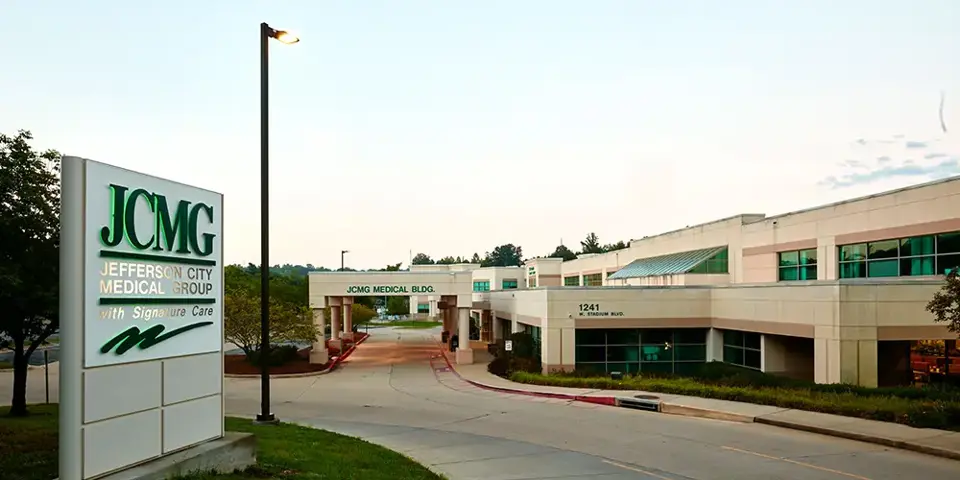 JCMG Medical Building 1241 West Stadium Blvd
Jefferson City, MO 65109 Map & Directions
Nuclear Medicine Articles
-
 Lung Cancer Awareness Month, November 2020
Lung cancer remains the leading cause of cancer death in women and men in 2020. Despite representing 12-13% of new cancer cases in 2020, it is ...
Read More -
Mammography 101: What Every Woman Should Know About Breast Cancer Screening
When it comes to breast health, early detection saves lives, and mammograms are one of the most powerful tools we have. JCMG’s Mammography team has ...
Read More

with Independent
Healthcare
